

How to Clean Wood Stove Glass
Make Your Fireplace Glass Clear Again
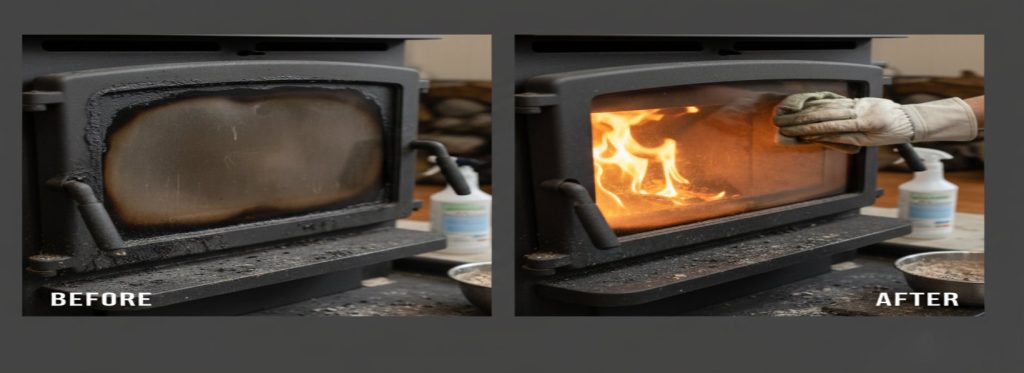
If the beautiful view of your roaring fire has turned into a black, sooty haze, you’re not alone. Cleaning that baked-on residue can seem daunting, but the best way to clean wood stove glass is actually the oldest, cheapest, and most effective method available: using the very ash created by the fire itself.
This technique is not only highly effective at cutting through tough creosote and soot, but it’s also non-toxic and free!
Key Takeaways: Get Your Glass Crystal Clear
- Best Method: The most effective and cheapest solution is the Ash and Damp Cloth Method, using fine wood ash as a mild, non-scratching abrasive.
- The Golden Rule: NEVER clean hot glass. Wait until the stove is completely cool to the touch to prevent cracking the glass or causing injury.
- Why It Works: Wood ash contains lye, a natural degreaser, which, when combined with water, creates a paste that cuts through the creosote like a chemical cleaner, but without the harmful fumes.
- Prevention is Key: The best way to keep your glass clean is to burn only dry, seasoned hardwood and operate your stove at high, consistent temperatures.
Step-by-Step: The Ash and Damp Cloth Method
This simple, old-school technique is recommended by most stove manufacturers and heating experts. It’s safe for ceramic glass and requires zero specialized chemical cleaners.
Step 1: Cool Down and Prep
- Cool It Down: Ensure your wood stove is completely extinguished and the glass is cool to the touch. This is non-negotiable for safety.
- Safety First: Lay down some newspaper or old towels on the floor in front of the stove to catch any ash and soot that will inevitably fall.
- Clear the Debris: Using a soft cloth or paper towel, gently wipe away any loose, flaky ash or soot from the glass surface.
Step 2: Create the Cleaning Paste
- Find Your Abrasive: Locate a small amount of fine, powdery, gray-white wood ash inside your firebox. This must be ash from burnt wood—do not use ash from coal (see FAQ).
- Dampen Your Cloth: Take a clean, non-abrasive rag, soft cloth, or a piece of crumpled-up newspaper (avoid harsh paper towels). Dampen one corner of the cloth with clean water—it should be damp, not soaking wet.
- Dip and Load: Dip the damp section of your cloth directly into the fine wood ash. You want a gritty paste to cling to the cloth.
Step 3: Scrub the Soot Away
- Gently Scrub: Rub the ash-loaded cloth onto the black, sooty areas of the glass using a steady, circular motion. You will see the black residue start to lift immediately.
- Reload as Needed: If the cloth starts to feel dry or the soot buildup is very thick, simply dampen the cloth again and reload it with fresh, clean ash. You can apply a bit of “elbow grease” for baked-on spots.
- Focus on the Edges: Pay special attention to the edges and corners, as soot tends to build up most heavily where the glass meets the seal.
Step 4: Wipe Clean and Buff
- First Wipe: Once the soot is lifted, use the clean, undipped side of the cloth or a fresh, slightly damp rag to wipe away the wet ash and soot mixture.
- Second Wipe/Polish: Use a clean, dry, soft cloth or a dry sheet of crumpled newspaper to buff the glass to a sparkling, streak-free shine. If any light film remains, a light spritz of a homemade solution of equal parts white vinegar and water can be used as a final polish.
- Clean the Outside: You can use standard glass cleaner on the outside of the door, but we recommend sticking to the ash and water for the inside.
Related Sub-Topics: The Best Way to Keep it Clean
The secret to a perfectly clear stove window isn’t just about the cleaning method; it’s about proper operation. Your glass shouldn’t blacken every time you burn. If it does, you may have an underlying issue.
1. The Importance of Airwash Technology
Most modern, high-efficiency wood stoves are designed with an Airwash System.
- How it Works: This feature pulls a curtain of pre-heated air down across the inside surface of the glass. This fast-moving, hot air separates the cooler glass from the hot combustion gases, causing the microscopic soot particles to re-burn before they can settle and stick.
- Optimizing the Airwash: Ensure your stove’s primary and secondary air controls are set correctly. Running the stove too slowly or “slumbering” the fire overnight will starve the Airwash system and cause the glass to quickly blacken. Learn more about optimal burning practices in our guide: How to Operate a Wood Stove.
2. The Critical Role of Seasoned Wood
The number one cause of black stove glass is burning wet or unseasoned wood.
- Moisture is the Enemy: Wood with a moisture content above $20\%$ burns cooler and produces large amounts of smoke and creosote—a tar-like residue that sticks firmly to the glass and flue.
- The Fix: Use a moisture meter to check your firewood. Only burn wood that has been seasoned (air-dried) for 6–12 months. This allows the water to evaporate, resulting in a clean, hot, efficient burn that engages the Airwash system and keeps the glass clear.
- Know Your Fuel: Make sure you are only burning approved wood in your unit. For information on other fuels, see Can You Burn Coal in Wood Stoves?.
Our Expert Says: Cleaning vs. Scrabbling
“As a stove expert, I see many customers panic and try to use metal scrapers, steel wool, or abrasive kitchen cleaners on their stove glass. Stop! Wood stove glass is actually a specialized ceramic glass that is highly resistant to heat, but can be easily scratched by metal tools or harsh abrasives. A scratched door not only looks terrible but can also compromise the integrity of the panel. The ash method is so effective because the soft, powdery wood ash acts as a gentle exfoliant. If you have extremely tough, multi-season buildup, use a specialized, non-abrasive commercial Stove Glass Cleaner—not a household cleaner like Windex, which can contain ammonia that may bake into the glass or create toxic fumes when the stove is next heated.”
Wood Stoves in Stephens City, VA
Residents in and around Stephens City, Virginia, rely on wood stoves for both primary and supplemental heating, especially during the cold Mid-Atlantic winters. Proper maintenance is essential in our region due to the long burning season and the common use of local hardwoods.
- Creosote Buildup: The temperature swings of a typical Virginia winter can lead to more frequent “low-and-slow” burns that cause rapid creosote buildup not just on the glass, but also in the flue. Regular glass cleaning is your first warning sign. If your glass blacks up quickly after cleaning, your stove may be running too cool, increasing your risk of a chimney fire.
- Our Local Stock: We specifically stock wood stoves, like the models available at Buying Wood Stoves in Stephens City, VA, that feature advanced Airwash technology to minimize the constant need for cleaning. We also carry manufacturer-approved glass cleaners and non-scratch cleaning pads for those who prefer a non-DIY solution.
- Installation and Safety: Clean glass often reflects a well-installed system. An improperly installed stove or a chimney with poor draft can exacerbate soot problems. Make sure your installation meets all local codes—a topic covered in our guide: How to Install a Wood Burning Stove.
What Do People Say About Our Business?
- “The free advice they gave me on using the ash to clean my stove glass saved me a fortune on cleaners. They know their stuff and they’re committed to safety. Highly recommend for any stove purchase or service in the Winchester/Stephens City area.” – Jessica K., Berryville, VA
- “We bought our new stove here and they walked us through the entire process, including the proper burning technique to keep the glass clear. Their maintenance tips were practical and made a huge difference in the cleanliness and efficiency of our unit.” – Tom D., Front Royal, VA
- “Honest service. My stove was black, and they correctly identified the problem wasn’t the glass, but my damp wood. They also showed me a professional glass cleaner to handle the severe buildup, which worked like magic.” – Michael S., Stephens City, VA
FAQ: Wood Stove Glass Cleaning
Q: Can I use Windex or standard household glass cleaner?
A: No, you should avoid them. Standard glass cleaners like Windex often contain ammonia, which can etch the glass surface when the stove is heated. More importantly, when the stove is next lit, the chemical residue can vaporize and create unpleasant or even noxious fumes. Stick to the ash method, vinegar and water, or a specialized stove glass cleaner.
Q: Why does my glass keep turning black right after I clean it?
A: The glass turning black quickly is a direct sign that your fire is running too cool and/or you are burning wood with high moisture content. Cold glass and smoke create creosote. To fix this:
- Verify your wood moisture is below 20%.
- Ensure your air intake vents are open enough, especially during the initial and mid-burn stages.
- Avoid “dampering down” the stove too much; let it burn hot enough to engage the Airwash system.
Q: Can I use the ash from my coal-burning stove to clean the glass?
A: No. Coal ash contains abrasive minerals and other compounds that are much harder than wood ash. Using coal ash to scrub your glass significantly increases the risk of scratching the expensive ceramic panel. Only use the fine, fluffy ash left over from burning wood.
Conclusion
A clean glass window is the true sign of an efficient wood stove operation. The simple, non-toxic ash and damp cloth method is the most effective way to cut through baked-on creosote and restore that beautiful, full view of the fire.
While cleaning the glass is a necessary maintenance task, remember that consistent glass blackening is a symptom of poor burning practices. By prioritizing dry, seasoned wood and operating your stove with the proper air settings, you’ll spend less time cleaning and more time enjoying the warmth and ambiance only a wood stove can provide.