
How to Operate a Wood Stove
Master the Art of Efficient Home Heating
|
Key Takeaways / TL;DR |
|
|---|---|
|
Direct Answer |
To operate a wood stove safely and efficiently, use dry, seasoned wood (≤ 20% moisture), employ the “Top-Down” fire starting method to reduce smoke, and control the burn rate by adjusting the air inlet vents and monitoring flue temperature (ideally 250°F to 500°F) to prevent dangerous creosote buildup. |
|
What You Need to Know |
Modern, EPA-certified stoves are up to 50% more energy efficient than older models and produce 96% fewer fine particles. Creosote buildup in the chimney is the leading cause of house fires. Secondary combustion in new stoves re-burns smoke for cleaner, hotter heat. |
|
Crucial Tools |
Wood Moisture Meter, Flue Pipe Thermometer, fire-safe metal Ash Container, and a Chimney Brush for cleaning. |
|
Safety First |
Never use flammable liquids, keep combustibles at least 3 feet away, and install smoke and carbon monoxide detectors. |
What You Need to Know About Wood Stoves
Operating a wood stove is a satisfying way to heat your home, offering a cozy warmth that’s hard to beat. However, it requires a clear understanding of combustion science and proper maintenance to ensure safety and maximum efficiency. Modern wood stoves, especially those that are EPA-certified, represent a significant technological leap over older models, offering cleaner, hotter, and more economical heat.
How Does a Modern Wood Stove Work?
A modern, efficient wood stove works by tightly controlling the air supply to manage a two-stage burning process for near-complete combustion.
- Primary Combustion: This is the initial burn of the physical wood (logs and kindling). Primary air is introduced, typically low in the firebox, to provide the oxygen needed for the wood to ignite and burn down to coals. This process releases heat and smoke, which is composed of flammable gases and unburned particles.
- Secondary Combustion (The Clean Burn): This is the key difference in modern stoves. Instead of letting smoke escape up the chimney, preheated secondary air is introduced, usually through small tubes or jets near the top of the firebox. This fresh oxygen ignites the unburned gases in the smoke, creating what looks like small, wispy, blue or yellow flames dancing above the main fire.
- Result: This secondary burn creates more heat from the same amount of wood, dramatically reduces particulate emissions (up to 96% less than old, uncertified stoves), and minimizes the smoke and tar deposits (creosote) that build up in the chimney.
Why is an EPA-Certified Stove Better?
Replacing an old, uncertified stove (manufactured before 1990) with a new EPA-certified model offers tangible benefits:
- Up to 50% more energy efficient, saving you money and labor.
- Uses 1/3 less wood fuel for the same amount of heat.
- Reduces fine particle emissions significantly (modern standards are now around 2.0 grams per hour or less, compared to 70 to 100 grams per hour for older models).
- Significantly reduces creosote buildup and the risk of chimney fires.
Step-by-Step Guide: How to Start a Fire in a Wood Stove
The old method of stacking wood with newspaper on the bottom often produces a lot of initial smoke. We recommend the “Top-Down” method for a cleaner, more efficient, and longer-lasting fire.
Preparation: Essential Wood & Tools
|
Essential Item |
Why It Matters |
Expert Tip |
|
Dry, Seasoned Firewood |
Moisture content must be 20% or less (ideally ≤15% on a freshly split face). Wet wood uses energy to evaporate water instead of heating your home, produces excessive smoke, and causes creosote buildup. Hardwoods like oak, maple, and birch burn cleaner and hotter. |
Use a wood moisture meter to check wood. Season hardwood for at least 12 months, softwood for 6 months. |
|
Kindling |
Small, dry pieces of wood (pencil-sized to 1 inch thick) that ignite easily and quickly. You can’t skip this. |
Split your own kindling or use fire-starters. Avoid glossy paper, which creates extra ash. |
|
Flue Pipe Thermometer |
A magnetic gauge placed 18-24 inches above the stove. This is your “speedometer” to ensure the fire is burning hot enough to prevent creosote but not too hot to damage the stove. |
Aim for an active burn temperature of 250∘F to 500∘F on the flue pipe to minimize creosote condensation. |
|
Fire-Safe Metal Ash Pail |
For safe and proper disposal of hot ashes. Never use plastic or paper containers. |
Store the closed container away from all combustible materials (on a non-combustible floor or the ground) until the ashes are completely cool. |
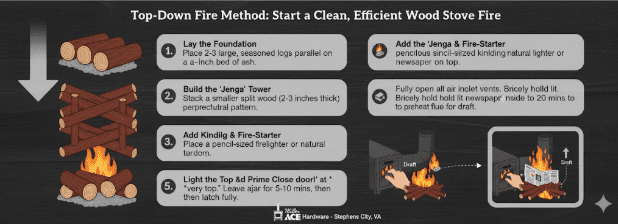
The Top-Down Fire Method
The top-down fire is stacked like an upside-down pyramid, which allows the fire to burn down and preheat the larger logs, releasing gases that ignite cleanly instead of immediately smoking out.
Step 1: Lay the Foundation (Largest Logs)
Place two to three large, seasoned logs (3-5 inches in diameter) on the bed of ash in the firebox, running parallel to the door. Leave a small layer of ash (about 1 inch) on the bottom to help protect the stove floor. This layer forms the base that will burn for hours.
Step 2: Build the ‘Jenga’ Tower (Mid-Sized Wood)
Create a second layer on top of the base logs using smaller split pieces (about half the size of the base logs). Lay them perpendicular (crisscross) to the base layer. This creates pockets of air that are crucial for combustion.
Step 3: Add the Kindling & Fire-Starter
Place a generous amount of fine kindling on top of the crisscrossed wood, again in a loose, crisscross, or “Jenga” pattern. Place a natural firelighter or scrunched-up newspaper on top of the kindling pile.
Step 4: Open Vents and Pre-Warm the Chimney
- Fully open all air inlet vents (primary and secondary) on the stove. This ensures maximum airflow for a fast, hot start and a strong draft (the natural pull of air up the chimney).
- To check or establish a good draft, you can light a tightly rolled piece of newspaper and hold it near the open flue inside the firebox for a minute to warm the chimney. This is called “prime the flue” and helps prevent smoke from blowing back into the room.
Step 5: Light the Top and Close the Door (Carefully)
- Light the firelighter or newspaper at the top of the kindling pile.
- Leave the stove door slightly ajar for the first few minutes (5-10 minutes) until the kindling is fully engulfed. This provides an extra supply of air to establish the fire and a strong draft. Never leave the stove unattended with the door ajar.
- Once the fire is well-established and the kindling is burning brightly, fully close and latch the stove door. The fire will now burn downwards, quickly heating the stove and the flue.
Operating for Efficiency: Mastering Airflow Control
Once your fire is established and the stove surface and flue are hot, you must reduce the airflow to control the burn rate and maintain maximum efficiency.
How Do I Adjust the Airflow for an Efficient Burn?
- Monitor the Flue Temperature: Watch your flue pipe thermometer. The goal is to keep the temperature in the “Optimal” range (250∘F to 500∘F).
- Adjust the Vents: After about 10-15 minutes of an open burn, or when the stove is radiating significant heat, begin to gradually close the air inlet vent(s).
- Closing the vent(s) restricts the oxygen supply, slowing the burn and forcing the air through the secondary combustion jets (on modern stoves). This is where you see the beautiful, clean secondary flames.
- Never close the vents completely (or “slumber” the fire), as this starves the fire of oxygen, causing it to smolder. A smoldering fire is inefficient, produces excessive smoke, and rapidly deposits creosote.
- Maintain a Visible Flame: Always adjust the vents only to the point where the wood continues to burn with a lively, visible flame. If the flames die down and the firebox fills with dark smoke, you’ve reduced the airflow too much. Open the air inlet vents slightly until the flame returns.
Safety and Maintenance: Avoiding Creosote and Fire Hazards
The leading cause of chimney fires is the accumulation of creosote—a tarry, highly flammable residue of unburned smoke particles that condenses on the cooler interior walls of the flue.
How Do I Prevent Creosote Buildup?
The best defense against creosote is a hot, clean burn.
- Burn Dry Wood: This is the most critical step. Wood moisture content should be below 20%. Dry wood burns hotter and produces less smoke/water vapor, which are the ingredients for creosote.
- Maintain Flue Temperature: Keep your flue pipe thermometer in the optimal range (250∘F to 500∘F). Below 250∘F, gases condense into creosote. Above 500∘F, you risk overheating and can damage your stove/chimney.
- Run a “Hot Burn” Daily: Even if you keep your fire low overnight, run the stove on a high setting (wide open vents) for about 15-20 minutes each day to bring the chimney temperature up. This helps burn off and loosen any minor soot or creosote deposits that may have formed during a slower burn.
- Never “Slumber” a Fire: Do not close the air control fully to try and make a log last overnight. This smoldering process is what causes the worst, sticky, Stage 3 creosote to form rapidly. It’s safer and cleaner to load up with large logs and let the stove burn down to a good bed of coals before fully damping the air down for an overnight burn.
Essential Wood Stove Safety Tips
|
Safety Action |
Why It’s Necessary |
USFA Statistic |
|
Install CO and Smoke Detectors |
Carbon monoxide is odorless and colorless. Smoke detectors are essential for fire warnings. |
Over 150 people die on average per year from carbon monoxide poisoning related to combustion appliances. |
|
Maintain Clearance |
Keep all combustible materials (furniture, rugs, drapes, wood) a safe distance from the stove. |
30% of non-confined residential heating fires occurred because the heat source was too close to combustibles. |
|
Inspect and Clean Annually |
Have a certified chimney sweep inspect your stovepipe and chimney annually, and clean if creosote buildup is 1/8 inch or more. |
Confined fires in chimneys/flues accounted for 87% of residential building heating fires. |
|
Check Your Hearth |
Ensure your stove sits on a non-combustible hearth extending at least 225mm in front and 150mm at the sides. |
A proper hearth prevents floor fires from stray embers. |
Your Wood Stove Experts at Miller Ace Hardware
At Miller Ace Hardware in Stephens City, VA, we understand the unique heating needs of the Shenandoah Valley. We don’t just sell wood stoves and accessories; we’re your local experts for safe, efficient, and cozy home heating.
- Stove and Insert Sales: We carry a selection of the latest EPA-certified wood stoves and fireplace inserts, ensuring you get a modern, high-efficiency appliance that meets current regulations and reduces your wood consumption by up to 1/3.
- Creosote Prevention Supplies: We stock essential tools like wood moisture meters, magnetic flue thermometers, chimney brushes, cleaning chemicals, and fire-safe metal ash containers—everything you need to prevent creosote and keep your chimney safe.
- Fuel Supply: Visit us for quality fire-starters, fatwood, and guidance on where to source local, properly seasoned hardwood for the cleanest burn in the Stephens City area.
Stop by our store and ask one of our seasoned associates for a personal demonstration on proper airflow control—we’ll help you dial in the perfect, clean burn for your stove!
Frequently Asked Questions (FAQ)
What is creosote and how fast does it build up?
Creosote is a highly flammable, tar-like residue that forms when unburned smoke particles condense on a cool chimney flue. It builds up rapidly when you burn unseasoned (wet) wood or operate your stove on a low, smoldering burn (too little air). The worst, Stage 3 creosote, is a hardened layer that often requires chemical treatment and professional removal.
How often should I clean my chimney?
You should have your chimney and stovepipe inspected by a certified chimney sweep at least once a year, preferably before the heating season begins. Cleaning is required if you find a 1/8 inch or more of soot or creosote buildup. The frequency depends heavily on how often you burn and the quality of your wood.
Can I burn construction lumber or garbage in my wood stove?
No. You should only burn dry, natural, seasoned firewood. Never burn garbage, glossy paper, treated or painted wood (like old lumber), plastic, or flammable liquids. These items produce toxic fumes, excessive smoke, and heavy creosote, which can damage your stove, pollute the air, and create a significant fire hazard.
What is “draft” and how can I fix a bad draft?
Draft is the suction that draws air into the firebox and pulls smoke up and out of the chimney. A good draft is essential for a clean, safe fire. A bad draft (smoke puffing into the room) is usually caused by a chimney that is too cold, a blocked flue, or negative pressure in the house.
- To fix a bad draft: Try priming the flue (warming it with a rolled, lit newspaper near the damper) or crack a window slightly to equalize house pressure and ensure the stove has enough oxygen.
Warm up your home the right way this winter!
Visit Miller Ace Hardware at 785 Fairfax Pike, Stephens City, VA for all your wood stove essentials, from wood moisture meters and flue pipe thermometers to fire-safe containers and the latest EPA-certified stoves.
Need expert advice on your stove? Stop in, or call us today at (540) 869-2313—we’re here to help you achieve a cleaner, hotter, and safer burn!