
What Is a Good Lawn Care Schedule in Virginia? — A Practical Guide for Healthy Turf
 |
Key Takeaways / TL;DR
|
Direct Answer:
A good lawn care schedule in Virginia involves early spring prep, consistent summer maintenance, fall overseeding and fertilization, and winter protection to keep grass healthy year-round.
What You Need to Know About Lawn Care in Virginia
Virginia lawns are typically made up of cool-season grasses like tall fescue, Kentucky bluegrass, and ryegrass. These grasses grow best in spring and fall, which means your lawn care schedule should revolve around those peak growth periods.
Key factors that affect your schedule:
- Soil temperature and seasonal transitions
- Rainfall patterns and humidity
- Sun exposure and shade coverage
- Type of grass and lawn usage
In areas like Stephens City, you’ll often deal with hot summers and cool winters, making timing especially important.
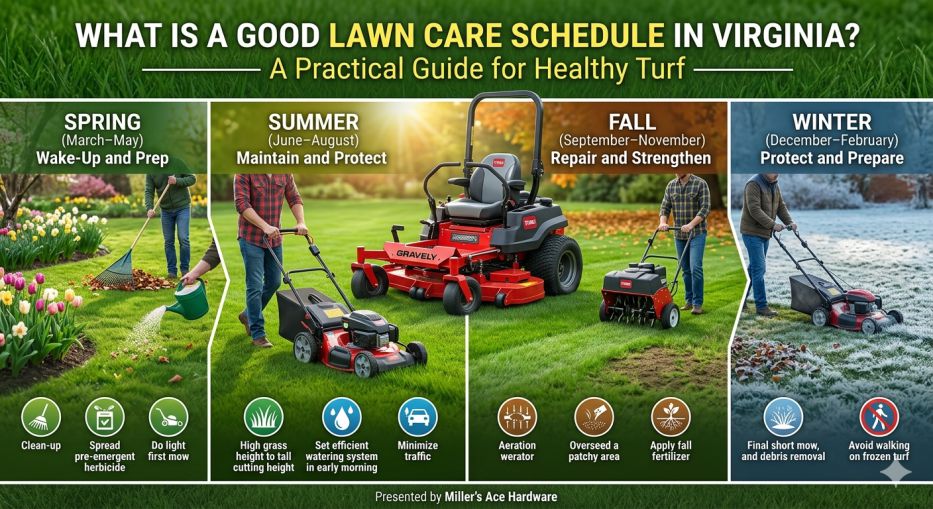
Seasonal Lawn Care Schedule (Step-by-Step)
Spring (March–May): Wake-Up and Prep
Spring is about getting your lawn ready for active growth.
Step 1: Clean and Inspect Your Lawn
Remove debris, sticks, and leftover leaves. This allows sunlight and airflow to reach the soil.
Step 2: First Mow of the Season
Start mowing once grass begins growing steadily. Keep blades sharp to avoid tearing.
Step 3: Light Fertilization
Apply a balanced fertilizer, but avoid overfeeding. Too much nitrogen in spring can stress grass later.
Step 4: Weed Control
Use pre-emergent herbicides to prevent weeds like crabgrass.
Summer (June–August): Maintain and Protect
Summer brings heat stress, which is where many lawns struggle.
Step 1: Adjust Mowing Height
Keep grass slightly taller (around 3–4 inches) to retain moisture and protect roots.
Step 2: Water Deep, Not Often
Aim for about 1–1.5 inches of water per week. Early morning watering works best.
Step 3: Watch for Stress Signs
Brown patches, thinning grass, or slow growth can indicate heat stress or drought.
Step 4: Limit Heavy Activity
Avoid excessive mowing or lawn traffic during peak heat.
Fall (September–November): Repair and Strengthen
Fall is the most important season for cool-season lawns.
Step 1: Overseeding
Fill in thin or patchy areas. This improves density and prevents weed growth.
Step 2: Core Aeration
Loosen compacted soil to allow nutrients, air, and water to reach roots.
Step 3: Fertilization
Apply a fall fertilizer to strengthen roots before winter.
Step 4: Consistent Mowing
Continue mowing until growth slows, gradually lowering the height.
Winter (December–February): Protect and Prepare
Winter is mostly about preservation.
Step 1: Final Mow
Cut grass slightly shorter before winter dormancy.
Step 2: Remove Debris
Keep leaves off the lawn to prevent mold and disease.
Step 3: Limit Foot Traffic
Avoid walking on frozen grass to prevent damage.
Infographic: Virginia Lawn Care Calendar
Why Mowing Equipment Matters More Than You Think
Many homeowners focus on watering and fertilizing but overlook the role of mowing equipment. The reality is, your mower directly affects lawn health.
Here’s why:
- Dull blades tear grass, leading to brown tips
- Inconsistent cutting height stresses the lawn
- Poor maneuverability causes uneven patches
At Miller’s Ace Hardware, customers often compare mowers based on:
- Yard size
- Terrain
- Frequency of mowing
Reliable brands like Gravely, Ariens, Toro, Exmark, and Scag are commonly chosen because they provide consistent cutting performance and durability over time.
Choosing the Right Mower for Your Lawn
Selecting the right mower helps maintain a consistent schedule.
For Small to Medium Yards:
- Push or self-propelled mowers
- Easier storage and handling
For Larger Properties:
- Riding mowers or zero-turn mowers
- Faster coverage and less fatigue
For Complex Layouts:
- Zero-turn mowers for tighter control
Having access to multiple options in one location allows homeowners to match equipment to their actual lawn conditions.
Real-World Example
A homeowner in the Winchester area had ongoing issues with uneven cutting and patchy growth.
After:
- Adjusting mowing height
- Switching to a mower with better deck consistency
- Following a seasonal schedule
They reduced mowing time by 30% and improved lawn density within one growing season.
Local Considerations for Stephens City and Nearby Areas
In and around Stephens City, lawns are affected by:
- Clay-heavy soil
- Humid summers
- Seasonal temperature swings
This makes fall lawn care especially important for long-term results.
Local homeowners often benefit from:
- Choosing drought-tolerant grass blends
- Maintaining sharp mower blades
- Following consistent mowing intervals
References & Resources
- Virginia Cooperative Extension – Lawn care guides and seasonal tips
- University of Maryland Extension – Regional turf recommendations
- USDA – Soil and climate data
FAQ
What is the best time to fertilize a lawn in Virginia?
Fall is the most important time, followed by light feeding in spring.
How often should I mow my lawn?
Usually once a week during peak growth, depending on weather and grass type.
What height should I cut my grass?
Around 3–4 inches for most cool-season grasses.
Is watering every day necessary?
No, deep watering once or twice a week is more effective.
When should I overseed my lawn?
Early fall is ideal for cool-season grasses.
Find the Right Equipment for Your Lawn Care Routine
Looking to improve your lawn care routine with the right equipment? Stop by Miller’s Ace Hardware and explore a range of mowers suited for different yard sizes and conditions. Our local team can help you compare options, understand key features, and choose equipment that supports a consistent lawn care schedule. Visit us today to get practical guidance and find what works best for your property